





Description
Professional quality binaural recording heads cost thousands of dollars, and the options available in the commercial market in the sub $500 range are frankly underwhelming (I say that because I’ve tried a couple of them). Binaural Audio recording enthusiasts have been building DIY binaural recording heads that rival even the most expensive options for some time now. It comes down to selecting good quality components that won’t cost a fortune, if you know what to look for. If you are not a DIYer and would like a pro-level option that won’t break the bank and that is built to last a lifetime, I think my version might be of interest:
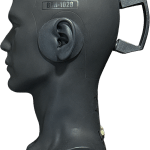
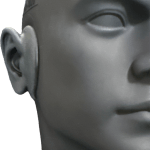
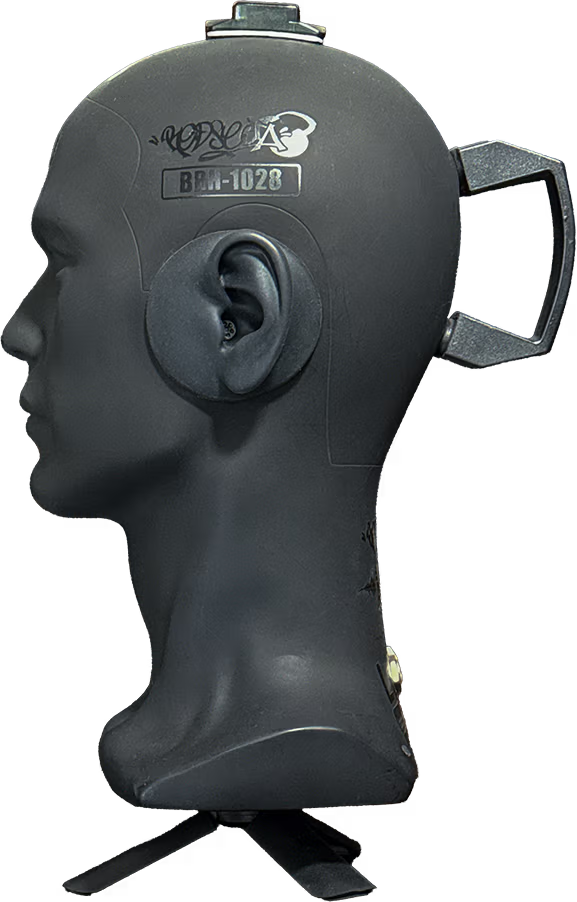
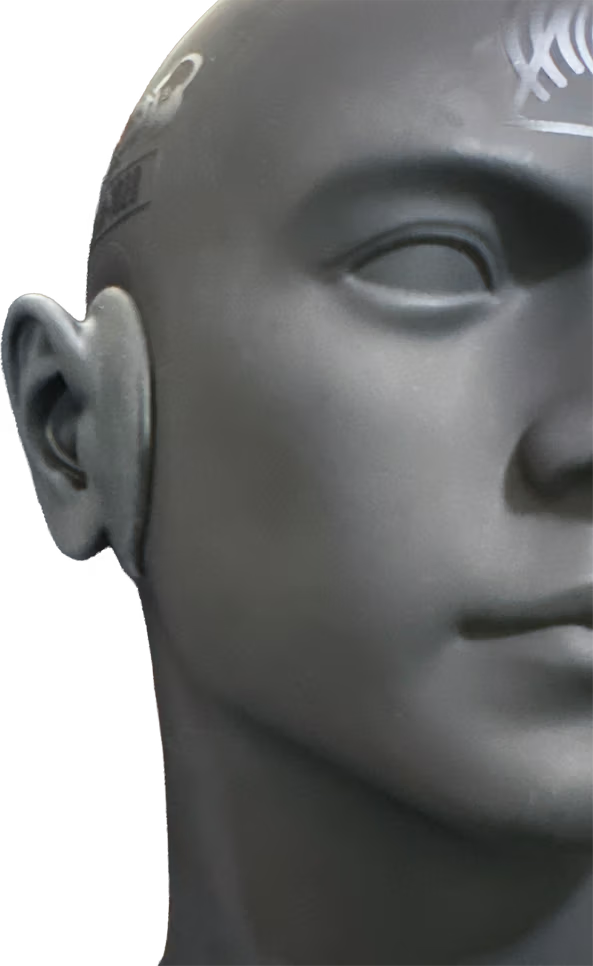
- Life-like silicone ears that feature realistic pinnae, especially around the tragus, which is the triangle-like flap of skin just outside the eardrum. The holes for the microphone capsules are carefully bored out to make sure that each capsule fits snugly.
- These “ears” are properly positioned and contoured on the mannequin head, creating a more realistic HRTF (Head Related Transfer Function) response. The distance between each capsule is an optimal 14.3cm (the average distance between a set of human ears is 13.3 to 16.5 cm).
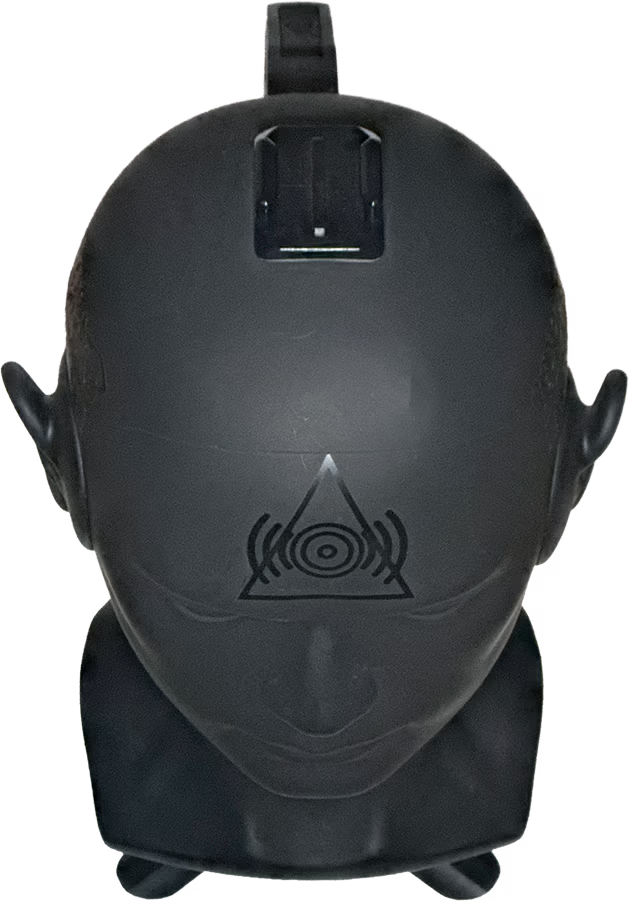
- High quality PVC mannequin head with realistic features and contours.
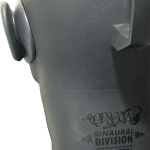
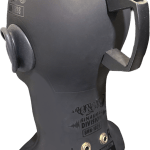
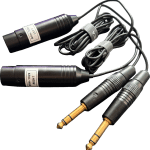
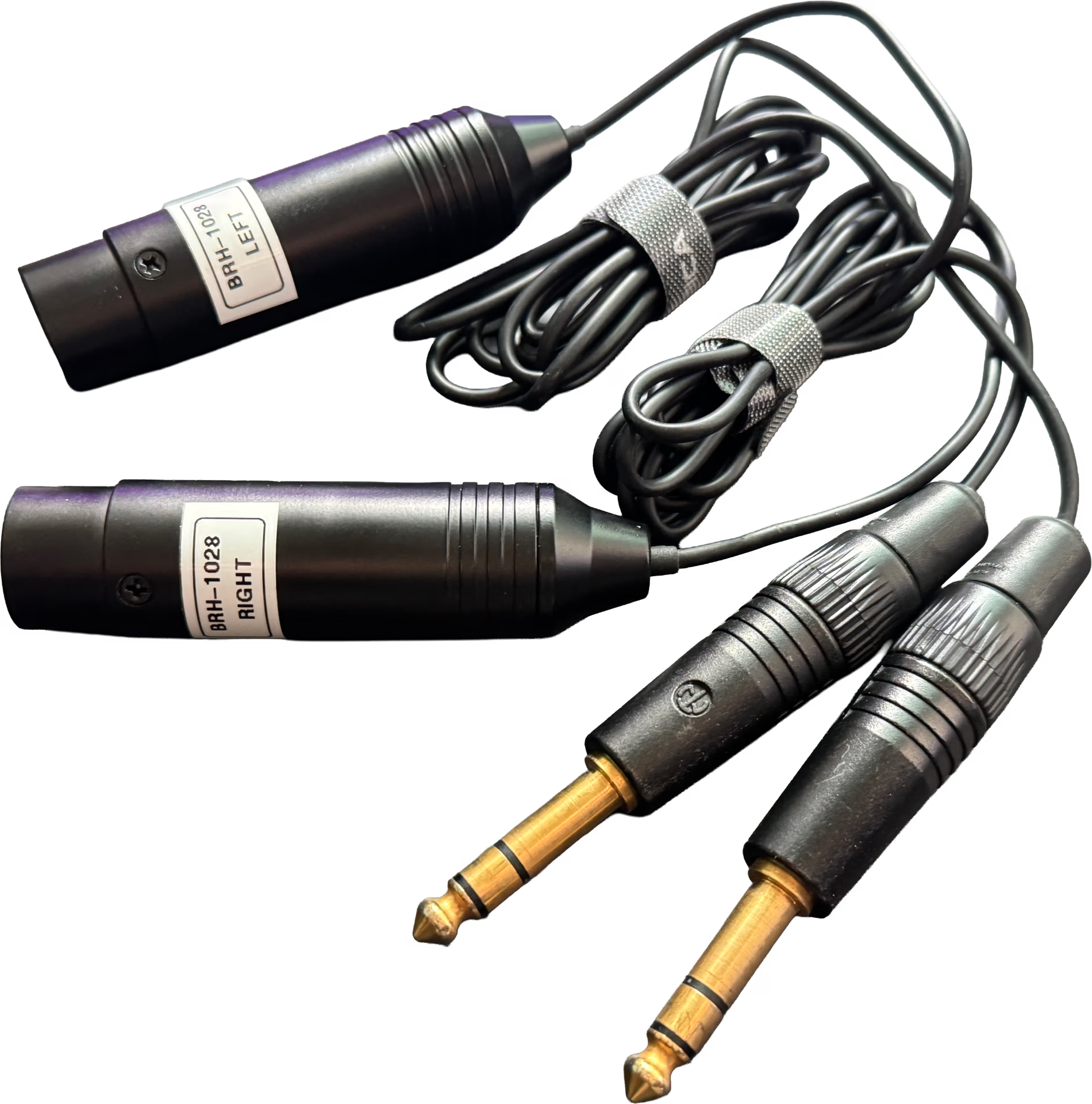
- Input connectors at the back of the head. The standard version, Sound Designer features TRS connectors and comes with Neutrik Gold TRS to XLR cables, and the Pro Ultra version features mini XLR connectors at the back of the head, and two 3-foot mini XLR to XLR cables.
- A standard tripod mount adapter is fitted on the bottom base, and a curved GoPro style base mount on top.
- An acoustically-transparent carrying handle with rubber washers bolted on the back of the head.
- A folding mini tripod stand is included, which can also be used as a carrying handle for mobile/moving field recordings.
More on the two different microphone options:
The Sound Designer version comes with a stereo pair of omnidirectional condenser mics. The Comica V02O is capable of capturing very good, accurate recordings. Its frequency range is linear from about 70 Hz – 10 kHz, with natural-sounding rolloffs at both ends of the spectrum. It can capture lower frequencies down into the low 40’s and close to 14 kHz in the upper range. It has a very good dynamic range response, with a signal-to-noise ratio of around >/= 60dB. These caught my attention after reading many “great bang for the buck” reviews by videographers that compare them to microphones that often cost double or more. They’re great for capturing nature/outdoor and speech recordings and the fact that they naturally roll off at these frequencies (<70 Hz/>10kHz) make them great for layering binaural elements over full frequency range material, think interludes or binaural accents that won’t try to fight you for space in the low end.
The Pro Ultra ($550) version features a stereo matched pair of Sonorous Objects SO.4 ultrasonic omnidirectional condenser microphones. These are highly sensitive microphones with a wide dynamic range that can capture an accurate reproduction across the entire frequency spectrum, and then some (up to 70 kHz!) with a signal-to-noise ratio of around >/= 74dB. Sonorous Objects hand builds their microphones in NYC. This would be the option to choose if you wanted a binaural head that records the most intricate details in your surroundings and one that would rival any Pro-quality binaural recording head that is available commercially. Please note: no modifications are made to the SO.4 mics, they plug internally to connectors and can be disconnected/removed.
A 50% deposit is required to start your build (build time is 2-3 weeks) with the remainder due when your build is finished. You’ll get updates on your build, and a 360 degree test recording of your binaural head prior to shipping. Questions? Use the contact form on the home page.
Reviews
There are no reviews yet.